Question: What XRP Actually Is — and Isn’t
XRP is not a store of value play like Bitcoin. It is not a smart contract platform like Ethereum. It has one job: sit between two fiat currencies during a cross-border transfer, settle the transaction in seconds for fractions of a cent, and disappear. That is it.
So why does the price fluctuate so wildly if it’s just a payment tool?
Because adoption hasn’t arrived at the scale the thesis requires. When a token’s utility is still largely theoretical, price becomes a pure sentiment trade — it spikes on good news and collapses on bad macro. That is exactly what XRP has been doing. The 54% drawdown from its 2025 highs isn’t a mystery — it’s what happens when speculation gets ahead of actual usage.
What would change that dynamic?
Real, measurable, on-chain transaction volume. Not partnership announcements. Not regulatory wins. Not ETF launches. Actual payment corridors — banks, remittance companies, payment processors — moving money through XRP at scale. When that shows up in the data, price stops being a sentiment trade and starts reflecting genuine demand. Until then, everything else is noise.
The key question for XRP is not “when will the price recover?” It is “when does adoption make the price irrelevant to debate?”
That being said, if you seek an upside with less volatility than holding an individual stock or token, consider the High Quality Portfolio. It has comfortably outperformed its benchmark—a combination of the S&P 500, Russell, and S&P MidCap indexes—and has achieved returns exceeding 105% since its inception. Why is that? As a group, HQ Portfolio stocks provided better returns with less risk versus the benchmark index; less of a roller-coaster ride, as evident in HQ Portfolio performance metrics.

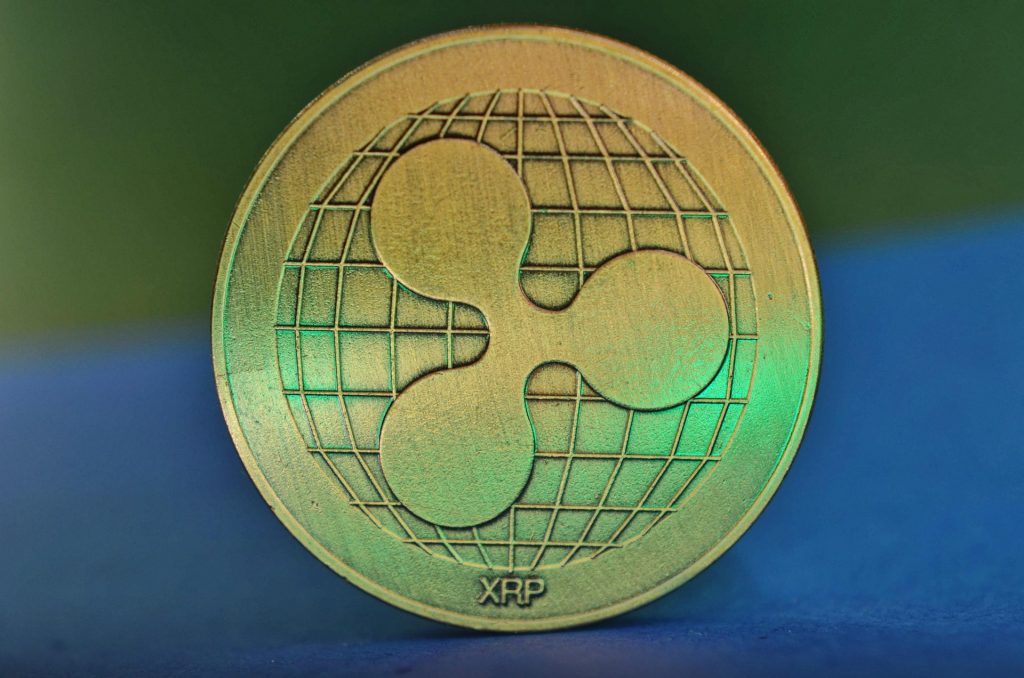
Image by Miloslav Hamřík from Pixabay
The Adoption Gap: Where XRP Actually Stands Today
Here is the uncomfortable truth: Ripple as a company is doing well. It has signed partnerships across Asia, the Middle East, and Latin America. It won its SEC case. It launched its own stablecoin. But XRP, the token, has not kept pace with Ripple, the company — and that gap is the whole problem.
Why can Ripple succeed without XRP succeeding?
Because banks can use RippleNet — Ripple’s messaging and settlement software — without ever touching XRP. They can settle in fiat, or increasingly in Ripple’s own stablecoin RLUSD. Ripple gets the revenue either way. XRP only benefits if it is specifically chosen as the settlement layer. Right now, most partners are not making that choice.
What does on-chain data say right now?
Total transaction fees on the XRP Ledger remain minimal relative to XRP’s market cap. That is the clearest single indicator that the network is not being used anywhere near the scale its valuation implies. High valuation, low throughput — that is a speculative asset, not a utility asset.
Is RLUSD a threat to XRP adoption?
It is the most underappreciated risk in the entire XRP investment thesis. Ripple now has a stablecoin purpose-built for institutional settlement that runs on the XRP Ledger. If Ripple routes its own payment products through RLUSD instead of XRP, the company’s growth and XRP’s growth decouple entirely. Watch whether Ripple actively incentivizes XRP usage or quietly lets RLUSD absorb the volume.
What Unlocks Adoption — The Triggers To Watch
Adoption doesn’t happen all at once. It follows a sequence. Here are the specific triggers that would move XRP from speculative to structural, in order of importance.
- A major payment corridor goes live on XRP — not RippleNet, XRP. This is the most important event that hasn’t happened yet. A high-volume corridor — U.S. to Mexico, UAE to India, intra-Southeast Asia — settling in XRP would be the proof-of-concept the market has been waiting a decade for. It generates real on-chain volume, creates real buy pressure, and fundamentally changes the narrative from “could be used” to “is being used.”
- Regulatory clarity outside the U.S. The SEC case is resolved, but that is one jurisdiction. Europe’s MiCA framework, Asian regulators, and Gulf financial authorities all need to give XRP a clear legal classification before institutional capital in those regions moves freely. Clarity in even one major non-U.S. market would unlock a meaningful pool of demand.
- A CBDC integration. Ripple is actively building CBDC infrastructure for central banks. If any sovereign nation routes cross-border settlements through XRP, that is not incremental adoption — it is systemic adoption. It embeds XRP into financial infrastructure at the sovereign level, the highest-trust use case imaginable.
- ETF assets under management that reflect genuine demand. XRP spot ETFs have launched. The question is whether inflows build to billions — creating structural, passive demand — or whether they disappoint as the first wave did. ETFs matter not because they drive short-term price, but because they bring in capital that doesn’t panic-sell and creates a demand floor.
Each trigger compounds the next. One corridor live makes the regulatory conversation easier. Regulatory clarity makes CBDC conversations credible. CBDC traction brings institutional capital. The sequence matters.
What Adoption Means for Price
Price targets divorced from adoption milestones are guesswork. Here is a framework that ties specific price ranges to specific adoption outcomes.
No meaningful adoption — $1.00 to $1.80.
On-chain data stays flat, RLUSD absorbs Ripple’s growth, and no major corridor goes live. XRP drifts sideways or lower. The current price near $1.46 is already pricing in some adoption optionality. Without evidence, that optionality erodes.
One or two corridors live, regulatory clarity improves — $2.50 to $4.00.
Real on-chain volume starts appearing, ETF inflows build steadily, and institutional interest formalizes. A breakout and hold above $3.30–$3.60 would signal the market is pricing in durable demand, not just a sentiment rally.
Multiple corridors live, CBDC integration confirmed, ETF assets in the billions — $5.00 to $10.00.
This requires several triggers firing in sequence. Achievable in a 12–18 month window if the adoption sequence accelerates, but it is a bull case, not a base case. The difference between $5 and $10 comes down to how much of the $800 billion annual remittance market XRP demonstrably captures.
Predictions above $10? Not credible in this timeframe. Reaching those levels would require a market cap exceeding the world’s largest financial institutions.
The Honest Conclusion
XRP has a real use case, real infrastructure, and real institutional relationships. What it does not yet have is proof. The on-chain data does not support the valuation at today’s prices — not because the thesis is wrong, but because the thesis is still unproven.
The next 12 to 18 months will answer the one question that matters: Does adoption follow the infrastructure, or does the infrastructure sit idle while competitors and Ripple’s own stablecoin absorb the opportunity?
Watch the on-chain transaction volume. Watch whether major corridors settle in XRP or RLUSD. Watch the ETF inflow data. Everything else — the macro swings, the sentiment cycles, the price predictions — is secondary to those three data points. When those move, the price follows. When they don’t, no amount of positive headlines changes the fundamental picture.
XRP is not a price story. It is an adoption story. The price is just the score.
See, to navigate shifting economic environments, you need a strategy that protects wealth through intelligent diversification across asset classes. What if you took advantage of the current commodity super cycle? Is a portfolio of 10% commodities, 10% gold, and 2% crypto, in addition to equities, likely to return more in the next 1-3 years? We’ve crunched the numbers. Our wealth management partner manages exactly these kinds of complex multi-asset strategies, blending real assets with high-performance equity sleeves like the Trefis High Quality Portfolio, which has returned > 105% since inception.
Invest with Trefis Market-Beating Portfolios
See all Trefis Price Estimates