
The latest on-chain data adds an unavoidable layer of pressure to Shiba Inu, which is at a technically delicate moment. The amount of SHIB that entered trading platforms increased by about 152 billion over the past day. Large exchange inflows have historically been seen as an indication of possible sell pressure, as tokens shift from long-term storage to liquidity zones where they can be promptly sold.
Things are not getting better for SHIB
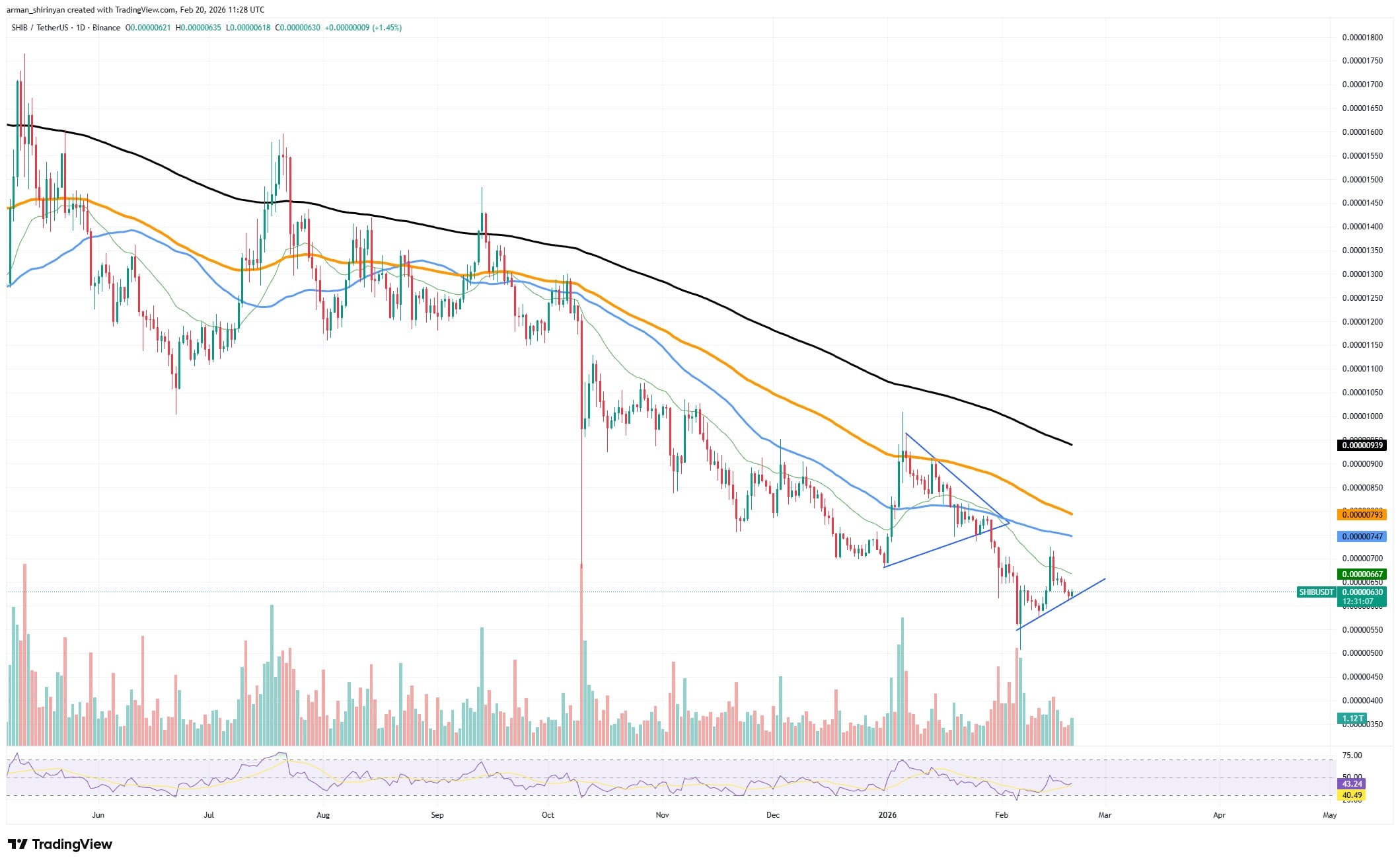
The price chart illustrates this precarious equilibrium. Declining moving averages and recurrent failures to hold recovery attempts indicate that SHIB is still in a bearish overall structure. A short-term rising trendline was formed by the recent bounce, indicating that buyers are attempting to build a local base. But this structure is still in its infancy and is susceptible. Since the price action is still below significant resistance levels, bulls are acting against the prevailing trend rather than in tandem with it.
Exchange metrics back up the cautious approach. Positive netflow and growing exchange reserves suggest that more tokens are being positioned for possible sale. Even if not all of these tokens are dumped right away, the increased liquidity serves as a burden. Such circumstances frequently restrict upside momentum and cap early rallies on markets like SHIB, where sentiment fluctuates rapidly.
However, there are subtleties to be aware of. It appears that some market participants are still accumulating or repositioning rather than simply exiting, as evidenced by the elevated exchange outflows and withdrawal activity. Instead of a clear directional consensus, this inconsistent behavior suggests uncertainty.
Higher lows forming
In terms of technical analysis, the main query is whether the new rising trendline will hold. In the event that SHIB stays above it and progressively moves into higher lows, the market might enter a stabilization phase. The asset runs the risk of reverting to a low-volatility grind, which has historically suppressed speculative demand, if the price moves sideways and falls below that support.
You Might Also Like
The simple next step for investors is to keep an eye on sustained volume and whether inflows are still increasing. Without significant buying interest, another wave of exchange deposits would probably make the current structure an unsuccessful attempt at recovery.