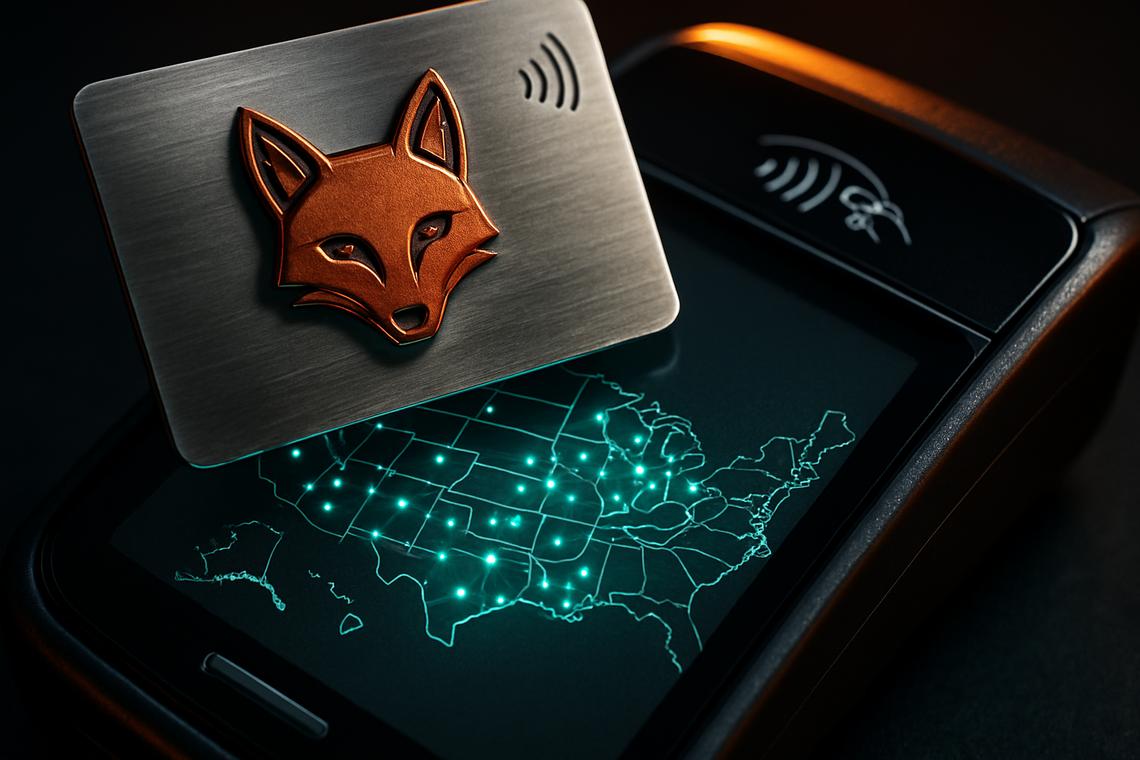
Consensys is rolling out new payment features in the United States as the MetaMask card brings a self-custody crypto option directly into everyday spending.
Nationwide rollout reaches 49 US states
The popular MetaMask wallet has expanded its Mastercard-backed crypto payment solution nationwide after pilot programs completed in 2024 and early 2025. The crypto card nationwide launch now covers 49 US states, and for the first time includes New York, a key market for regulated digital asset services.
However, residents of Vermont still cannot access the product, although Consensys has indicated that further geographic expansion is planned. The company positions the solution as a bridge between on-chain assets and mainstream payments, targeting both physical and online commerce.
The MetaMask card connects wallet balances to traditional payment rails, allowing users to spend crypto at merchants that already accept standard cards. Moreover, the product is fully compatible with Apple Pay Google Pay integrations and supports a virtual card that is activated once an account is approved, simplifying online and mobile transactions.
At checkout, the system converts cryptocurrency to fiat currency at the point of sale while preserving conventional card behavior for merchants. This design lets retailers process payments as they would with any other Mastercard, while users retain crypto exposure until the moment of purchase.
Partners and infrastructure behind the rollout
The card leverages Mastercard‘s global acceptance network but operates within a regulated framework tailored for digital assets. Cross River Bank issuer arrangements provide card issuance and oversee compliance, including know-your-customer and anti-money laundering checks required in the United States.
Furthermore, Monavate delivers the infrastructure that links MetaMask wallet balances to merchant payment systems. This backend connectivity synchronizes blockchain-based funds with card authorization flows, ensuring that transactions clear instantly while preserving the familiar experience of using a debit product.
The collaboration between Consensys, Mastercard, Cross River Bank and Monavate underscores how traditional finance players are testing new models for crypto payments. That said, MetaMask continues to emphasize user sovereignty through a self-custody architecture rather than centralized account holdings.
Self-custody design for direct wallet spending
The MetaMask card employs a fully self custody crypto card structure that keeps assets on-chain until a transaction is executed. Users are not required to park funds in a custodial account, which contrasts with many competing products that hold balances off-chain prior to spending.
When a payment is authorized, the card triggers an immediate crypto-to-fiat conversion from the user’s chosen wallet assets. However, up to that point, users retain full control over their keys and digital holdings, reflecting MetaMask’s long-standing focus on decentralized ownership.
This model aims to replicate the convenience of a debit product while preserving blockchain connectivity. The transaction approval process feels familiar to cardholders, yet behind the scenes the platform supports multiple token types and processes settlements in real time on-chain.
In practice, the solution bridges everyday retail activity with on-chain asset storage. Digital holdings remain under direct user authority until the exact moment of conversion, avoiding reliance on centralized exchanges. This structure aligns with the broader industry shift toward self-custody and non-custodial payment flows.
Rewards, Metal Card tier and on-chain incentives
To encourage regular use, MetaMask has introduced an on-chain reward mechanism that turns spending into redeemable incentives. Standard-tier cardholders can earn up to 1% back in mUSD tokens, creating a continuous link between everyday purchases and digital asset accumulation.
For users seeking higher benefits, the premium metal card membership offers up to 3% back on the first $10,000 in annual purchases. Moreover, this Metal Card tier carries a $199 yearly fee that unlocks additional advantages including waived foreign transaction fees and extended ATM network access.
Subscribers to the premium tier also receive an exclusive physical card design tied directly to their on-chain wallet, adding a tangible component to the digital spending experience. The structure combines lifestyle branding with functional payment upgrades.
Reward redemptions feed back into the broader MetaMask ecosystem and can provide access to emerging loyalty programs. Additionally, the platform integrates with DeFi protocols such as Aave, allowing qualifying balances to generate yield while remaining accessible for transactions.
Integration, usage and growing ecosystem
The metamask card positions itself as a gateway between self-custodied crypto and everyday payment environments in the MetaMask card USA market. Users can add the virtual card to mobile wallets in a similar way to how to add debit card to MetaMask-style payment flows, then spend at any merchant that accepts Mastercard.
Moreover, the card’s compatibility with both in-store and online checkouts ensures flexibility for different spending habits. Virtual credentials support e-commerce and subscription payments, while the physical version targets point-of-sale usage and ATM withdrawals where supported.
Community interest around the launch is already visible across discussion channels such as MetaMask card Reddit threads and other social platforms. That said, Consensys continues to emphasize regulatory compliance and staged rollouts, particularly in sensitive jurisdictions.
As geographic availability extends beyond the United States, MetaMask plans to scale its payments infrastructure globally while keeping self-custody at the core of its design. The combination of real-time crypto conversion, regulated banking partners and layered rewards positions the product as a notable entrant in the evolving self custody crypto debit card landscape.
In summary, the MetaMask card integrates a self-custodial wallet model, regulated issuance through partners like Cross River Bank and on-chain rewards in mUSD, offering US users a new way to spend digital assets across Mastercard’s vast acceptance network.