Trump family-backed American Bitcoin said Tuesday it has expanded its fleet of Bitcoin mining machines, increasing its computing capacity as competition among large-scale miners intensifies.
The company has acquired 11,298 new application-specific integrated circuit (ASIC) miners, which are expected to add about 3.05 exahashes per second (EH/s) to its operations once it is deployed at its Drumheller, Alberta site this month.
The purchase will boost American Bitcoin’s fleet size to 89,242 miners, representing about 28.1 EH/s of owned capacity.
The additional machines are rated at about 13.5 joules per terahash, a measure of energy efficiency that can influence operating margins in an industry where electricity costs are a primary expense.
The expansion increases American Bitcoin’s share of the global Bitcoin network’s total hashrate, modestly improving its probability of earning block rewards. However, higher computing power does not automatically translate into higher revenue. Mining profitability remains dependent on Bitcoin’s market price, network difficulty levels and energy costs.
Network difficulty stands at 144.40 T, meaning that 144.40 trillion hashes are needed to find a valid block hash, according to CoinWarz. It has been at that level since Feb. 19.
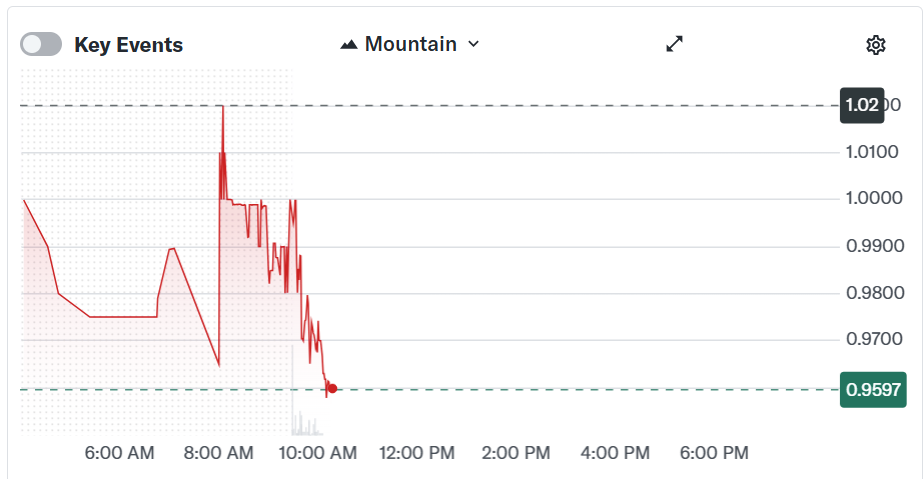
Shares of American Bitcoin were little changed following the announcement before trading lower into Tuesday’s session, broadly in line with weakness across equity markets.

Related: Bitcoin mining’s 2026 reckoning: AI pivots, margin pressure and a fight to survive
Bitcoin-heavy treasury strategy carries risk
American Bitcoin, which went public last year through a reverse merger with Gryphon Digital Mining, has adopted a Bitcoin-centric corporate strategy that extends beyond mining operations.
In addition to expanding its hashrate, the company has accumulated more than 6,000 Bitcoin (BTC) on its balance sheet, according to industry data. The strategy mirrors a growing trend among mining companies that retain a significant portion of the Bitcoin they mine rather than sell it immediately, effectively using production to build long-term exposure to the asset.
Holding large Bitcoin reserves can amplify gains during price rallies, strengthening the company’s balance sheet and potentially enhancing shareholder value. However, the strategy also increases exposure to price volatility.

That risk became evident in the fourth quarter, when American Bitcoin reported a net loss of $59 million. The loss was largely driven by a $227 million non-cash mark-to-market adjustment reflecting Bitcoin’s price decline during the period. Such accounting adjustments do not represent realized losses but can materially impact reported earnings.
Related: Bitcoin miners chase 30 GW AI capacity to offset hashprice pressure