Aave DAO introduced a plan to run an annual $50 million token buyback funded by DeFi revenues. The program targets AAVE repurchases on a steady, ongoing basis. It sets buybacks as a standing part of governance.
The proposal arrived Wednesday from the Aave Chan Initiative (ACI). It places token buyback policy inside Aave’s tokenomics rather than short bursts. The scope focuses on using protocol income already generated.
The framework treats Aave DAO as an allocator of DeFi revenues. It details roles, limits, and pacing. It keeps execution within transparent governance rails.
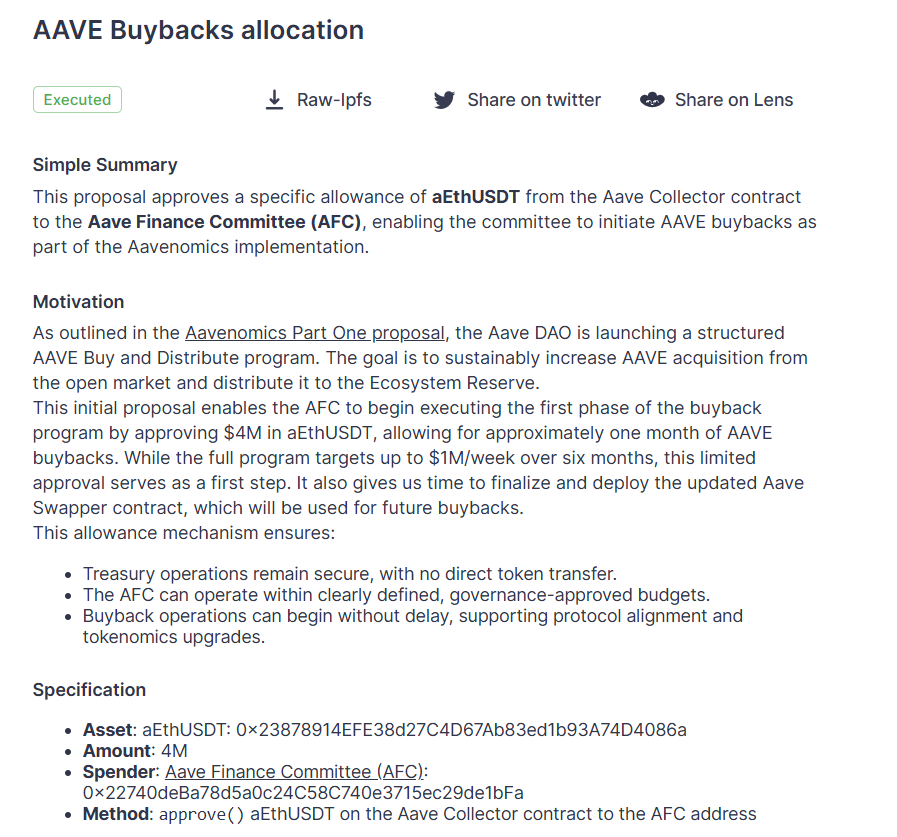
Execution Mechanics: Weekly AAVE Purchases By AFC and TokenLogic
The plan assigns execution to the Aave Finance Committee (AFC) and TokenLogic. They would buy AAVE weekly using DeFi revenues. Size depends on market conditions.
Weekly purchases range from $250,000 to $1.75 million. The bands allow flexibility across liquidity and volatility. They also reduce slippage in thinner books.
Funding sources remain protocol earnings. The plan avoids tapping operational budgets or risk buffers. It links the token buyback directly to Aave DAO cash flows.
Governance Process: ARFC Review, Snapshot Vote, Onchain Confirmation
The proposal moves first to Aave Request for Comment (ARFC). That stage collects community feedback on scope and parameters. It sets inputs before any vote.
Next, the DAO holds a Snapshot vote. Snapshot records sentiment off-chain without gas costs. It signals whether to advance.
If support holds, an onchain governance vote finalizes the token buyback. That step authorizes execution by AFC and TokenLogic. It preserves accountability at each stage.
DeFi Revenues and Tokenomics: Policy, Pacing, and Limits
The Aave DAO token buyback binds to DeFi revenues rather than external capital. It scales with protocol income. It fits inside a rule-based schedule.
The AAVE buy range—$250,000 to $1.75 million per week—sets a clear lane. AFC and TokenLogic can adjust within those limits. They respond to liquidity and volatility.
The structure embeds tokenomics in operations. It defines who executes, when, and how much. It retains governance control to amend parameters.
In April, the community approved a $4 million AAVE buyback. AAVE rose about 13% around that decision. The figure remains part of the record.
On Friday, a separate plan sought an immediate $20 million buyback. It cited AAVE undervaluation and treasury capacity. It aimed to act without impacting expenses or reserves.
The new Aave DAO proposal differs in duration and structure. It shifts from one-off actions to a permanent token buyback. It builds a predictable cadence around DeFi revenues.
Aave v4 Upgrade: Q4 2025 Hub-and-Spoke and Dynamic Risk
The Aave v4 upgrade is slated for Q4 2025. It introduces a modular hub-and-spoke design. Hubs pool liquidity, while spokes host customizable markets.
This architecture separates shared liquidity from market logic. Teams configure spoke parameters without fragmenting core funds. The goal is efficient, scalable lending venues.
Aave v4 also adds dynamic risk configurations across multi-asset portfolios. Parameters adapt to portfolio conditions. The design aims to reduce liquidation risk across positions.
ACI authored the Aave DAO token buyback proposal. AFC and TokenLogic handle weekly AAVE purchases. The community reviews, votes, and confirms.
ARFC gathers structured comments before voting. Snapshot measures sentiment off-chain. Onchain governance binds the result.
The sequence documents each decision. It links DeFi revenues, tokenomics, and AAVE execution. It maintains traceability for amounts, cadence, and accountability.