

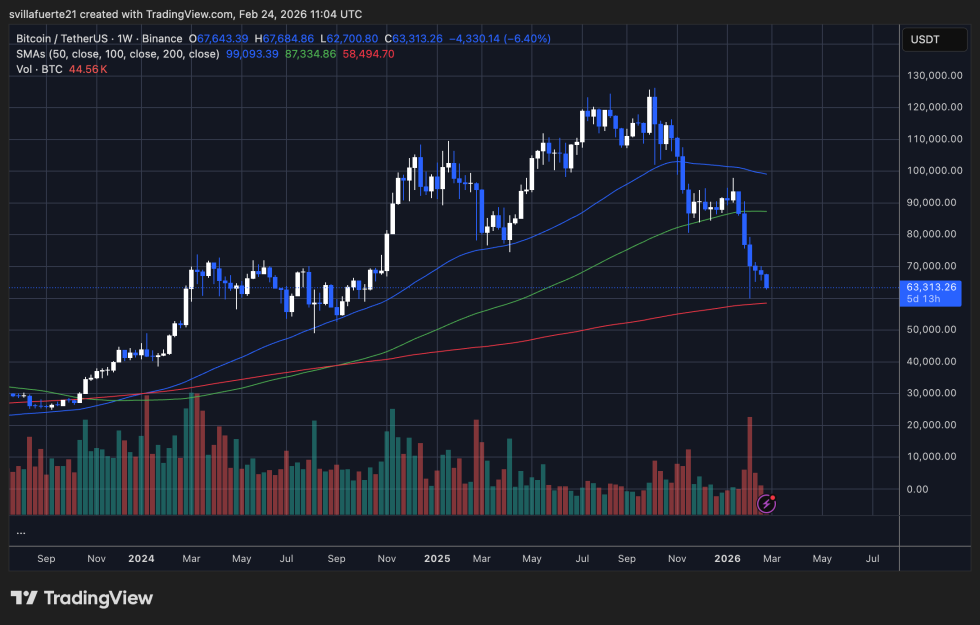
Bitcoin has remained under sustained pressure since losing the $70,000 level, entering a corrective phase that has gradually pushed price lower while defining a consolidation range just above the $63,000 zone. Momentum has weakened noticeably, with buyers struggling to regain control and volatility compressing as the market searches for direction. This range-bound behavior reflects a transitional phase rather than a confirmed trend reversal, as traders weigh macro uncertainty, liquidity conditions, and broader risk sentiment across digital assets.
Amid this backdrop, Bitcoin mining difficulty has recently rebounded following a brief dip. Mining difficulty adjusts roughly every two weeks to maintain consistent block production timing. When difficulty rises, it typically signals that more computational power — or hashrate — has returned to the network. Temporary drops can occur when external factors, such as weather disruptions, energy constraints, or operational shutdowns, force some miners offline.
The recent rebound, therefore, suggests renewed miner participation and sustained network resilience. Greater difficulty often indicates confidence among miners in Bitcoin’s long-term viability, as maintaining operations becomes more competitive and capital-intensive. However, it can also increase cost pressure on less efficient miners, potentially influencing short-term supply dynamics if some are forced to liquidate holdings to cover expenses.

Editorial Process for bitcoinist is centered on delivering thoroughly researched, accurate, and unbiased content. We uphold strict sourcing standards, and each page undergoes diligent review by our team of top technology experts and seasoned editors. This process ensures the integrity, relevance, and value of our content for our readers.