

Bitcoin saw a sudden surge in large inflows of funds into exchanges and institutional wallets, with over $4.2 billion in BTC transactions reportedly taking place in a span of 30 minutes.
The data available for tracking Bitcoin transactions shows that thousands of BTCs have been sent to major platforms, sparking debate about institutional investment.
Significant Bitcoin Inflows Across Major Platforms
According to publicly available on-chain data, several large wallets and exchanges recorded significant Bitcoin inflows within the same short period of time. The figures include:
- Binance: 5,539 BTC
- Coinbase: 4,199 BTC
- Kraken: 2,028 BTC
- Galaxy Digital: 2,555 BTC
- Satoshi whale wallet: 2,775 BTC
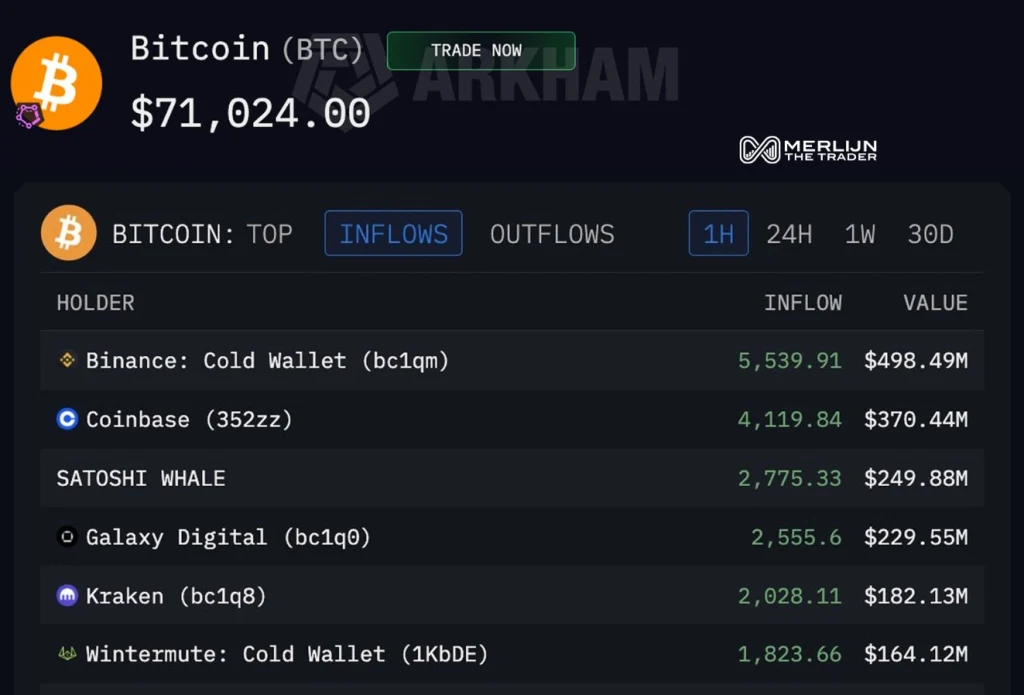
The total of these transactions is well over 14,000 BTC, or over $4.2 billion at market prices of around $71,000 per BTC at the time of the report.
Also Read: Bitcoin Reclaims $71K as ETF Inflows and Binance Buying Surge
What the Data Suggests
A large influx of Bitcoin into exchanges or institutional wallets can be a sign of institutional accumulation or rebalancing of treasuries, ETF-related activity, custodial transfers, over-the-counter settlement activity, or internal exchange wallet restructuring.
It is also important to remember that influxes of funds do not necessarily represent buying activity. Some of these influxes could be for internal wallet management purposes.
Institutional Participation in Focus
The volume of the transactions that have been recorded has also raised interest because retail traders do not normally handle thousands of BTC in a matter of minutes.
Market analysts have associated such transactions with hedge funds, asset managers, crypto-native investment firms, and large custodial platforms. The addition of Galaxy Digital and large exchanges to the list has further fueled the speculation that the transactions might be institutionally driven.
Market Context
BTC has been trading in a volatile range, and the sudden influx of such a large amount of money is expected to have an effect on exchange liquidity levels, short-term price volatility, derivatives positioning, and funding rates across futures markets.
However, confirmation from multiple data sources is generally required to ascertain whether such transactions are indicative of net accumulation or rebalancing.
Also Read: American Bitcoin Increases Mining Power with 12% Capacity Expansion