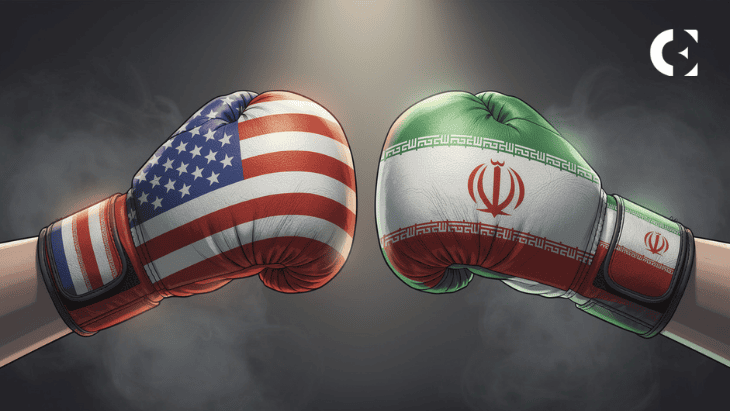
- ChatGPT, Claude, and Grok predict the US-Iran war could last 4–6 weeks, not years.
- Major escalation risks include Gulf disruption, proxy involvement, and failed diplomacy.
- Bitcoin remains resilient, showing no panic despite geopolitical and energy market shocks.
A fast-moving regional war between the United States, Israel, and Iran has entered an intense phase. Since coordinated strikes began on February 28, 2026, the conflict has spread beyond Iran and Israel into Lebanon and parts of the Gulf, with energy infrastructure and strategic routes like the Strait of Hormuz under pressure.
With markets rattled and oil surging, the financial community is pondering: How long could this war last? Three leading AI systems, ChatGPT, Claude, and Grok, have offered nuanced timelines.
ChatGPT: Weeks to Months, Not Years
According to ChatGPT’s assessment, predicting an exact end date is impossible. But the most realistic outlook points to weeks to a few months, rather than years. The reasoning centers on official rhetoric.
For instance, Israeli Prime Minister Benjamin Netanyahu has indicated the campaign “is not going to take years.” Even U.S. President Donald Trump has told journalists the operation will take a few weeks.
However, ChatGPT flags several escalation risks.
- Expanded proxy involvement, particularly from Hezbollah in Lebanon
- Disruption to Gulf energy routes
- Failure of diplomatic intervention by global powers
If objectives remain limited to degrading missile, nuclear, and command capabilities, the war could unravel within weeks. But deeper regional entanglement could extend it into a multi-month conflict.
Grok: A 4–5 Week Window
Grok offers the most specific projection. Based on statements attributed to President Donald Trump, it estimates the core U.S.–Israeli campaign could last four to five weeks, potentially concluding by late March or early April 2026.
The assumption here is that the operation is not aimed at full regime change, but rather at degrading Iran’s military infrastructure.
Still, Grok cautions that Iranian retaliation, including missile and drone strikes across the Gulf, could extend the timeline if resistance intensifies.
Claude: 4–6 Weeks
Claude’s projection closely mirrors Grok’s, pointing to four to six weeks for a cessation of major strikes. It also highlights the uncertainty created by leadership disruption and retaliatory vows from Iranian officials.
Claude stresses that wars rarely end cleanly, especially when regional proxies are involved. While a formal end to large-scale air operations could come within a month or so, low-intensity conflict or proxy engagement could continue beyond that window.
Essentially, No “Endless War,” But No Quick Fix Either
Across all three AI systems, one pattern stands out:
- No forecast expects a multi-year war.
- None predicts an overnight resolution.
- The most realistic range is late March to mid-April 2026 for major operations, assuming escalation remains contained.
The biggest variable remains whether the conflict stays limited or expands further into Lebanon, the Gulf, and key shipping corridors. Notably, Iran’s Foreign Ministry has said the government is focusing on “defence,” rejecting negotiations.
The Case for Bitcoin During Wartime
While missiles fly and oil routes face disruption, Bitcoin is sending a different signal. Despite the geopolitical shock, short-term holders have not shown the usual panic behavior associated with global crises.
On-chain data from CryptoQuant shows declining loss-driven transfers to exchanges, even after Bitcoin dipped below $65,000. Historically, wartime price action has followed a pattern:
- In 2022, during the Russia–Ukraine conflict, Bitcoin initially dropped before rallying 40%.
- In 2025, during Israel–Iran tensions, it fell before rebounding 25%.
- Now, in 2026, it has pulled back again, but without widespread capitulation.
Analysts note that Bitcoin remains in a mid-cycle correction from its October 2025 all-time high near $126,000. Key technical levels sit around $70,800 as resistance and $57,772 as major support.
If short-term holders continue to avoid panic selling, it strengthens the argument that much of the forced liquidation phase may already be behind the market.
In Sum
Wars historically create uncertainty in traditional markets. Oil spikes, equities slide, safe havens strengthen. Yet Bitcoin’s behavior suggests a gradual shift in perception.
Rather than acting purely as a speculative risk asset, it is trading like a neutral, borderless reserve instrument during geopolitical stress.
If the war concludes within the 4–6 week window projected by AI systems and panic remains contained, Bitcoin could mirror prior rebounds during conflicts.
But if escalation spreads and exchange inflows from short-term holders spike again, volatility could return quickly. At the moment, the battlefield timeline remains uncertain.
Related: Bitcoin Price Prediction: $458M ETF Inflows Meet $67,000 Support Test
Disclaimer: The information presented in this article is for informational and educational purposes only. The article does not constitute financial advice or advice of any kind. Coin Edition is not responsible for any losses incurred as a result of the utilization of content, products, or services mentioned. Readers are advised to exercise caution before taking any action related to the company.