

A euro stablecoin backed by large European banks moves closer to launch as banking consortium Qivalis negotiates with crypto exchanges and liquidity providers. According to the Spanish business newspaper Cinco Días, these negotiations were reported on Monday, March 2. The planned launch date for this project is mid-2026 under the EU’s MiCA framework.
This banking group includes six major banks (ING, UniCredit, BBVA, CaixaBank, SEB, and KBC). The aim is to offer an alternative digital euro via a regulated channel.
The stablecoin integration provides the advantages of traditional fiat-based payment rails combined with blockchain-based settlement and supports on-chain liquidity. A compliant euro stablecoin used by institutional investors may redirect some institutional euro liquidity away from dollar tokens.
EU MiCA Regulations Determine Distribution Strategy
Qivalis is seeking regulated exchanges and market makers who comply with the new EU MiCA regulatory framework to meet distribution purposes. According to the report, a Spanish crypto exchange (Bit2Me) has had conversations with the consortium members regarding participation.
Bit2Me is currently licensed to operate under the MiCA regulatory framework. Jan Sell, Chief Executive Officer of Qivalis and previously CEO of Coinbase Germany, stated that the expectation is to provide distribution for the euro stablecoin.
This will be achieved via a combination of banking channels and regulated cryptocurrency trading venues.” This makes institutional and on-chain liquidity available but still within compliance with EU regulations.
Source: X
Also Read | Tether Acquires Stake in Whop to Power Global Stablecoin Payments
Redemption Process and Reserve Structure
At a 1:1 ratio to the euro, the stablecoin will be collateralized. At least 40% of the collateral reserves will be deposited into bank accounts. The remainder of the collateral reserves will be allocated among short-term sovereign debt within the Eurozone to lower concentration risks.
Qivalis intends to establish a redemption model for its stablecoin where customers wishing to redeem their tokens can do so at any time. As a result, corporate treasury departments and other entities requiring fast settlements to meet payment obligations will be able to do so.
The reserve structure of the stablecoin is expected to meet the MiCA definition of liquid assets. The structure is expected to have a similar risk profile to banks. This would be true as long as the euro stablecoin is used for payment purposes rather than trading.
Cross-Border B2B Payments and International Trade Settlements
Qivalis expects that the euro stablecoin will be capable of supporting B2B cross-border payment settlements, international invoicing, and global trade settlement flows. Today, most cross-border B2B transactions are conducted through correspondent banking arrangements and dollar liquidity.
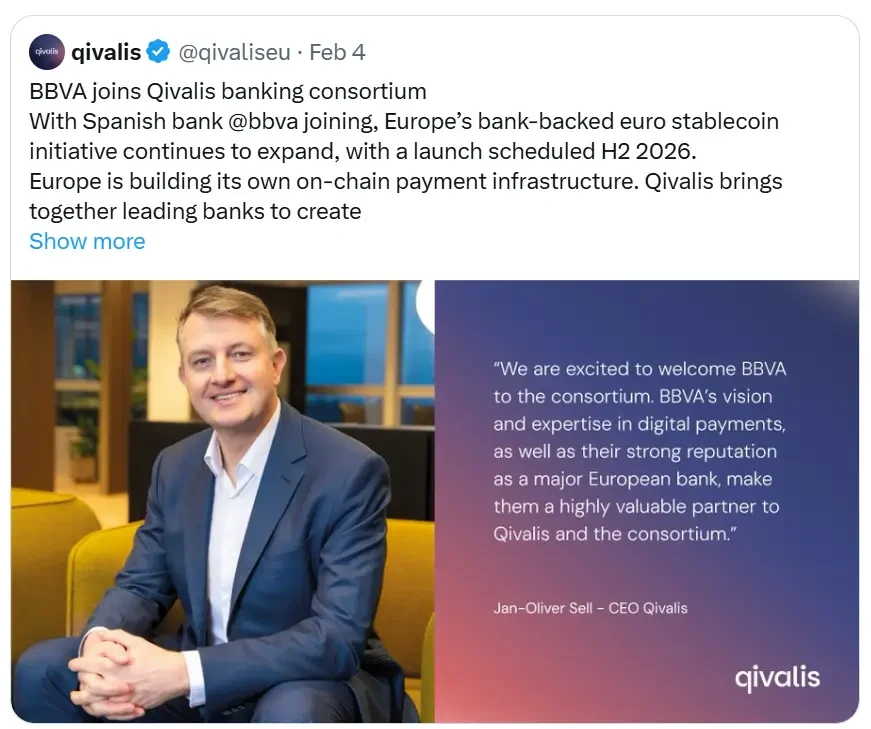
In February 2025, BBVA was named the 12th member of the consortium, which further increased the reach of Qivalis throughout the Eurozone. Additionally, BBVA’s membership expands its role in the institutional payments sector through the establishment of the euro stablecoin.
Dollar-Denominated Stablecoins Dominate Global Stablecoin Markets
U.S. dollar-denominated stablecoins dominate this market space globally today. Together, USDT and USDC account for approximately 96% of total stablecoin transactions per month, per CoinMarketCap data (March 2026).
A euro-pegged stablecoin issued by a bank has the potential to create a balance between euro-denominated and dollar-denominated liquidity on the blockchain. If the euro stablecoin is effectively integrated into regulated exchanges and corporate payment systems, this may occur.
Why This Matters
If there is a regulated euro stablecoin, fiat liquidity can be brought on the blockchain and cause a significant increase in institutional crypto payment rails across Europe.
Also Read | 1st Stablecoin License to be Given: Hong Kong’s Bold Move