

Stablecoin peer-to-peer transactions via self-custody crypto wallets have become a major concern for regulators around the world. The Financial Action Task Force (FATF) said that such transactions are causing significant gaps in oversight because there is no involvement of a regulated entity in the entire process.
On Tuesday, the FATF issued a detailed report on its concerns regarding stablecoins, unhosted wallets, and P2P transactions. The watchdog said that users are able to directly transact via self-custody wallets without involving any intermediary like a crypto exchange or a custodian entity.
FATF Warns Stablecoin Growth Weakens AML Controls
The watchdog added that such a scenario is likely to undermine anti-money laundering regulations because stablecoin transactions are growing and are being increasingly used in trading, daily transactions, and cross-border transactions.
The group urged the governments to evaluate the risks associated with the arrangements involving stablecoins. It recommended that the governments take appropriate measures to reduce the risks.
These steps may include enhanced measures for the interaction between self-custody wallets and regulated platforms, as well as clear guidelines for firms that distribute or issue stablecoins.
The FATF described P2P transfers via self-custody wallets as a major vulnerability. Such transfers are not made via virtual asset service providers or financial institutions. This makes it difficult for authorities to trace and combat such illegal activity.
Also Read: ARQ Raises $70 Million to Expand Stablecoin Services in Latin America
The FATF also identified that blockchain-based transactions are traceable and remain on the public ledger. However, it is difficult to trace them because of the use of pseudonyms on wallet addresses. This is still a factor that limits enforcement.
FATF Warns of Growing Stablecoin Risks
The FATF identified that Chainalysis reported on January 9 that illicit crypto addresses will receive at least $154 billion in 2025. The FATF also identified that stablecoins account for 84% of this illicit transaction volume. The FATF highlighted the figure to show the scale of current misuse.
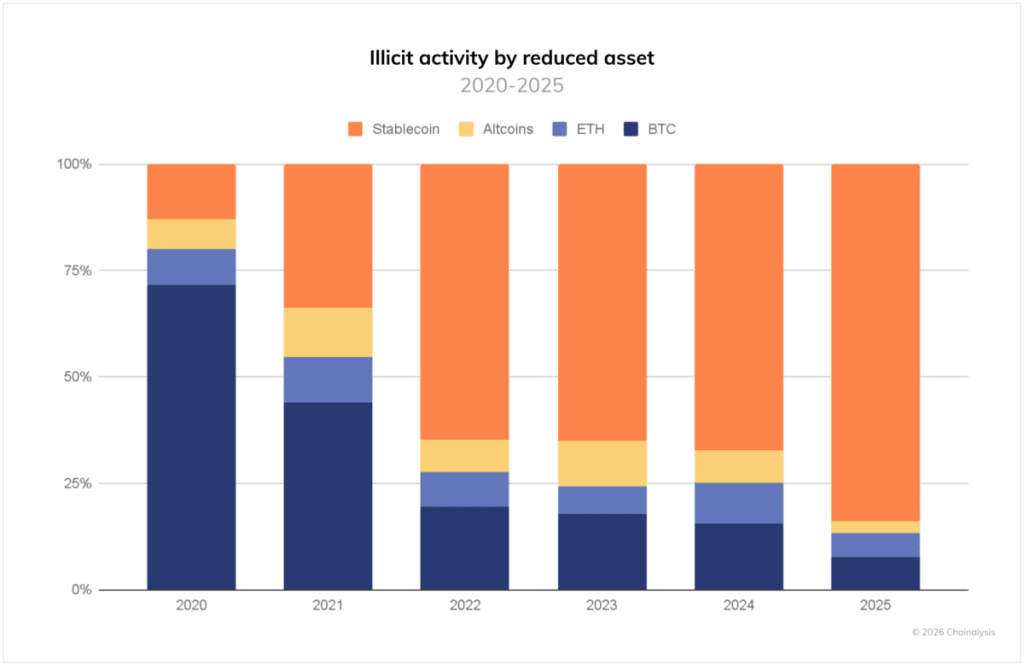
Source: Chainalysis
Chainalysis also reported that the illicit transactions were less than 1% of the total crypto transaction volume. While the amount of unlawful activities is increasing, it is still a small fraction of the overall blockchain transactions.
The FATF reported that the adoption of stablecoins is advancing at a rapid pace. It further added that the level of oversight needs to increase at the same pace to minimize risks of anonymous P2P transactions.